
Food Safety : India’s kitchens are turning into crime scenes—not because of knives or gas stoves, but because of the food we trust every day. From bread laced with hazardous chemicals to milk diluted with detergent and spices dyed with textile colors, the rot runs deep. Now even eggs are under suspicion, after a report found banned, DNA-damaging compounds in a popular “clean, cruelty-free” brand. What is the solution to this problem? Let’s dive deep into this issue in this blog and discuss practical remedies.
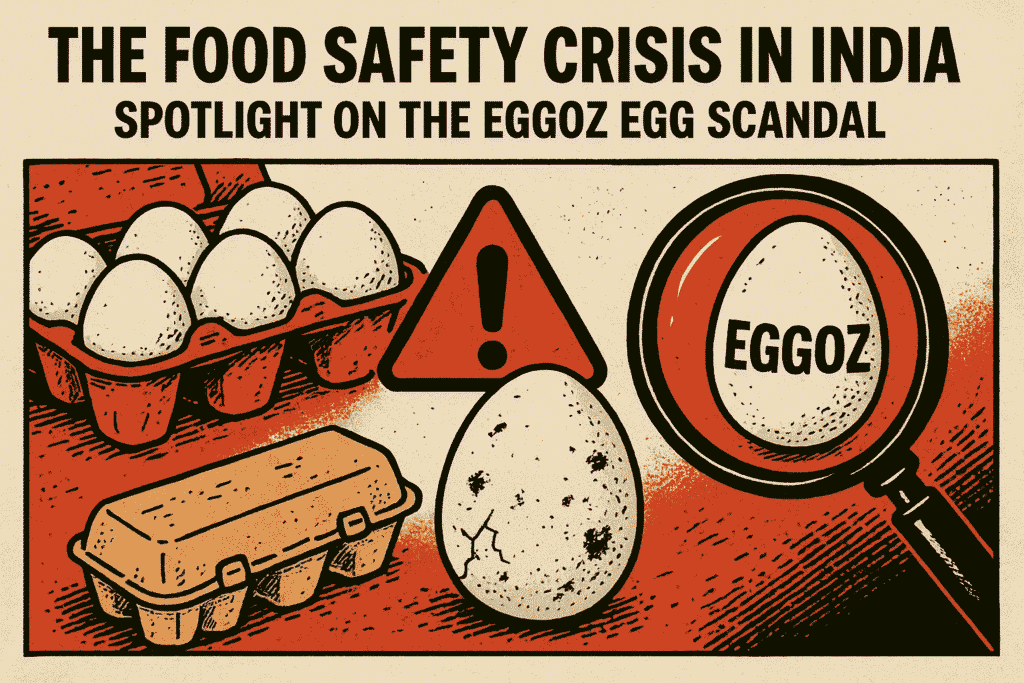
The Food Safety Crisis in India : Spotlight on the Eggoz Egg Scandal
India’s food supply chain is plagued by adulteration and contamination, turning everyday staples into potential health hazards. Recent reports highlight milk adulterated with detergents, spices dyed with textile colors, and bread laced with harmful chemicals—these issues are eroding trust in basic foods. The latest alarm comes from a December 2025 lab test by consumer awareness group Trustified, which detected traces of two banned antibiotics—nitrofuran and nitroimidazole—in a batch of eggs from Eggoz, a brand marketed as “antibiotic-free,” “clean,” and “cruelty-free.” These compounds are genotoxic (DNA-damaging) and linked to cancer risks, banned in many countries with zero-tolerance policies, though India’s Food Safety and Standards Authority (FSSAI) allows trace levels.
Eggoz has affirmed compliance with FSSAI norms, denied antibiotic use, and commissioned independent NABL-accredited lab tests for transparency. But this isn’t an isolated incident—it’s symptomatic of weak enforcement, opaque supply chains, and profit-driven shortcuts in poultry farming, where such drugs are sometimes illegally used to boost production and prevent infections. The good news? Solutions exist at individual, industry, and policy levels. Below, practical steps inspired by expert recommendations and ongoing discussions are outlined.
Solutions to Tackle Food Adulteration : Ensuring Safer Food
Addressing this requires a multi-pronged approach: empowering consumers, pressuring brands, and demanding systemic reform. Let’s explore these levels in detail.
Consumer-Level Actions
Start by choosing transparent, verified sources. Prioritize brands or local farms that share public lab test reports, third-party audits, and details on feed or antibiotic practices. Don’t rely solely on labels like “organic” or “antibiotic-free” without proof. Additionally, opt for short supply chains—buy from trusted local vendors, farmers’ markets, or direct-from-farm deliveries to minimize contamination risks. Stay informed and report issues: Use apps like FSSAI’s Food Safety Compliance or Trustified for real-time alerts, and report suspicious products via the National Consumer Helpline (1915). These steps reduce exposure to adulterated batches by favoring accountability over marketing hype, while local sourcing cuts out intermediaries where tampering often occurs. Practically, scan QR codes on packaging for traceability, test small batches at home (e.g., using online adulteration kits for milk or spices), and source eggs from certified organic farms under NPOP (National Programme for Organic Production).