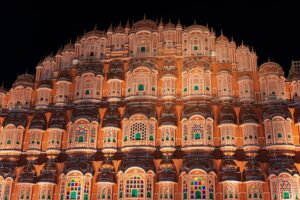

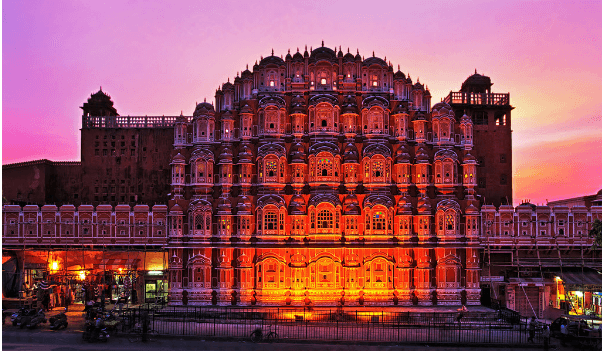
Hawa Mahal : Imagine standing in the heart of a bustling pink city, gazing up at a honeycomb of delicate windows that seem to dance with the desert breeze. That’s Hawa Mahal for you—a five-story facade that’s less a palace and more a poetic veil between the royal past and the vibrant present. Nestled in the chaotic charm of Jaipur, Rajasthan’s “Pink City,” this architectural gem has whispered secrets of intrigue, tradition, and ingenuity for over two centuries. If you’re a history buff, an architecture aficionado, or just someone who loves a good story wrapped in sandstone, join me as we step through its lattice screens and into a world frozen in time.
The Royal Veil: A Peek into Hawa Mahal’s Storied Past
Built in 1799 by Maharaja Sawai Pratap Singh, the grandson of Jaipur’s visionary founder Maharaja Jai Singh II, Hawa Mahal wasn’t designed for grand banquets or opulent thrones. No, this was a sanctuary for the women of the royal zenana—the secluded quarters where queens, princesses, and attendants lived under the purdah system. From behind its 953 intricately carved jharokhas (overhanging enclosed balconies), they could catch glimpses of the world outside: colorful street processions, lively festivals, and the everyday rhythm of the city below. It was a clever compromise between isolation and curiosity, allowing the royals to stay hidden while staying connected.
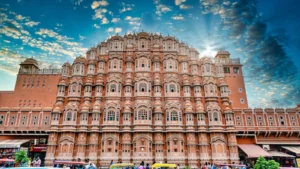
The palace’s name, meaning “Palace of Winds,” is no poetic flourish. Jaipur’s scorching summers demanded innovation, and Hawa Mahal delivered. Cool breezes funneled through those tiny windows like nature’s own air conditioning, turning the structure into a living testament to the Kachwaha dynasty’s blend of Rajput valor and Mughal finesse. Under the guidance of architect Lal Chand Ustad, it rose as part of the sprawling City Palace complex, yet stands alone like a blushing sentinel on the edge of Badi Chaupar. Over the years, it has witnessed the ebb and flow of empires, from the princely states to independent India, evolving from a private viewpoint into a public icon that draws wanderers from across the globe.
What strikes me most about its history isn’t just the dates and dynasties—it’s the human element. Picture the rustle of silk saris against stone walls, the muffled laughter of hidden observers, and the faint echo of elephant processions. Hawa Mahal isn’t just stone; it’s a silent storyteller of lives veiled in mystery.
A Symphony in Sandstone: The Architectural Poetry of Hawa Mahal
If Jaipur is a canvas painted in rose-tinted hues, Hawa Mahal is the masterpiece that steals the show. Towering 53 meters high, its facade unfurls like a frozen honeycomb, each level adorned with progressively more windows—fewer at the base, blooming into a frenzy at the top for optimal airflow. Crafted from the region’s signature pink sandstone (locally sourced and quarried to perfection), the structure glows ethereally at dawn and dusk, especially during the monsoon when the air hums with petrichor.
Step closer, and the details will leave you breathless. Floral motifs of lotuses and peacocks intertwine with geometric Islamic patterns, a harmonious nod to the syncretic influences of Rajput and Mughal eras. Those jharokhas aren’t mere holes; they’re sculpted screens with overhanging cornices that cast playful shadows, turning the wall into a living tapestry. Inside, it’s a different tale—narrow corridors wind upward via steep staircases, revealing sparse chambers that feel more like a high-rise beehive than a lavish lair. There’s no vast Durbar Hall here; the magic is in the restraint, the clever use of space to prioritize ventilation over volume.
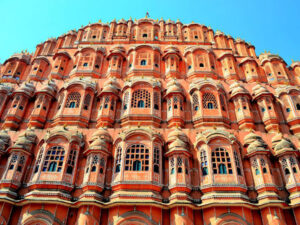
Fun fact: The pyramid-like shape isn’t accidental. It mimics Lord Krishna’s crown, a divine touch that infuses the secular with the sacred. In an age before fans or AC units, this design was revolutionary—passive cooling at its finest, a lesson in sustainable living we could all borrow from today. Wandering its innards, I couldn’t help but marvel at how something so visually extravagant serves such a practical purpose. It’s architecture that breathes, literally.
A Morning with the Winds: Experiencing Hawa Mahal Up Close
My first encounter with Hawa Mahal was at sunrise, when the city still slumbers under a golden haze. Arriving via a rickety auto-rickshaw through the labyrinthine lanes of the old city, I crossed the road to the iconic viewpoint—a spot where the palace’s full glory unfolds like a postcard come to life. From here, it’s a riot of pink perforations against the sky, perfect for that Instagram-worthy silhouette (though trust me, the real charm is in the details you can’t capture in a single frame).
Entry is straightforward and affordable, with tickets that let you roam freely from 9 AM to 4:30 PM most days. Opt for an early visit to beat the heat and the hordes—by noon, the place buzzes with school groups and selfie sticks. Inside, a small museum on the ground floor houses artifacts like antique jewelry and faded photographs, offering a tangible link to the zenana’s whispers. Climb those stairs (wear comfy shoes; they’re no joke), and emerge onto balconies where the wind truly comes alive, tousling your hair as you peer down at the bazaar’s awakening chaos.