
Tesla Launch in India : India’s electric vehicle (EV) landscape is buzzing with excitement as Tesla, the global EV giant, makes its long-awaited debut in the country. With the launch of its first showroom in Mumbai and plans for further expansion, Tesla is poised to shake up India’s automotive market. Here’s a look at the latest developments and what they mean for India’s EV future.
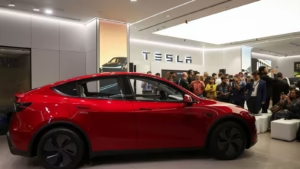
Tesla in Mumbai
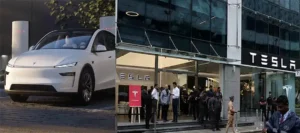
Tesla officially opened its first Indian showroom at Mumbai’s Maker Maxity Mall in Bandra Kurla Complex, marking a significant milestone for the company’s entry into one of the world’s fastest-growing automotive markets. The Tesla Model Y, the world’s best-selling electric car, takes center stage, imported as a Completely Built Unit (CBU) from Tesla’s Shanghai factory. Priced at ₹59.89 lakh (~$69,756) for the rear-wheel-drive variant and ₹67.89 lakh (~$79,074) for the long-range version, the Model Y targets India’s premium EV segment. However, high import duties of around 70% make these vehicles notably more expensive than local competitors like Tata Motors and JSW MG Motors.
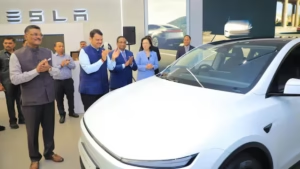
Tesla’s Mumbai launch is just the beginning. The company is already planning a second showroom in New Delhi and is actively hiring for roles in sales, service, and charging infrastructure to support its operations. The Model Y, along with the Model 3, has undergone homologation for Indian roads, ensuring compliance with local regulations. While Tesla’s premium pricing may limit its immediate reach in India’s price-sensitive market, the brand’s global appeal and cutting-edge technology are expected to attract affluent buyers and EV enthusiasts.
Challenges and Opportunities
India’s EV market is growing rapidly, with sales increasing by 20% in 2024 to 99,165 units, driven by government subsidies and policies aiming for 30% EV adoption by 2030. However, Tesla faces significant challenges. The premium EV segment (vehicles over $20,000) accounts for just 6.6% of India’s EV sales, with local players like Tata Motors commanding a 60% market share. Limited charging infrastructure and high import tariffs (up to 110% on some vehicles) further complicate Tesla’s strategy.