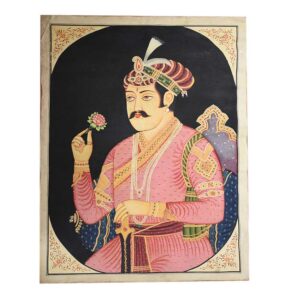
Jahangir, the fourth Mughal Emperor of India, reigned from 1605 to 1627. Born as Nur-ud-din Muhammad Salim on August 31, 1569, he was the son of the great Emperor Akbar and Empress Mariam-uz-Zamani. His rule was marked by significant developments in art, culture, and administration, as well as political intrigues and personal challenges. Jahangir’s reign is often regarded as a golden period in Mughal history, with notable achievements in painting, architecture, and governance.
Early Life and Ascension to the Throne
He was born in Fatehpur Sikri, the imperial capital of the Mughal Empire at the time. He was named Salim, reportedly after the Sufi saint Sheikh Salim Chishti, who had blessed Akbar with the hope of a son. As the eldest surviving son of Akbar, Salim was the natural heir to the throne, but his journey to kingship was fraught with tension.
During the later years of Akbar’s reign, a rift developed between father and son. Salim was impatient to ascend the throne and even rebelled against his father in 1599 while Akbar was engaged in the Deccan campaigns. However, the rebellion was short-lived, and Akbar forgave Salim, restoring him to favor. Upon Akbar’s death on October 27, 1605, Salim was crowned Emperor and took the title Jahangir, meaning “Conqueror of the World.”
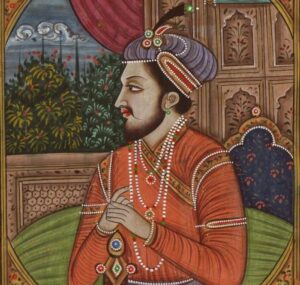
Administration and Governance
Jahangir inherited a vast and prosperous empire, and he largely continued the policies of his father while also making notable contributions of his own. His administration was known for its efficiency, and he introduced several important reforms. One of his most famous initiatives was the installation of the “Chain of Justice” outside his palace in Agra, allowing any citizen to seek redress for grievances directly from the Emperor.
Jahangir’s reign was characterized by a blend of centralized power and delegation to trusted nobles and military officials. He was also known for his keen interest in legal affairs and his fair sense of justice. However, his rule was also marked by court intrigues and the growing influence of his Persian wife, Nur Jahan, who played a significant role in political affairs.
Role of Nur Jahan
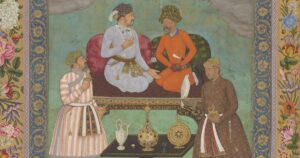
Nur Jahan, originally named Mehr-un-Nissa, was the most influential woman in his life and one of the most powerful women in Mughal history. She married Jahangir in 1611 and quickly became his closest confidante and advisor. She wielded immense influence over court affairs, effectively ruling the empire in Jahangir’s later years as his health declined due to excessive consumption of alcohol and opium.
Nur Jahan issued royal decrees, minted coins in her name, and had significant control over imperial decisions. She was also a patron of the arts and played a key role in the construction of several architectural marvels, including her own tomb in Lahore. Her political acumen ensured the stability of Jahangir’s reign, although her dominance also led to resentment among other nobles.
Patronage of Arts and Culture
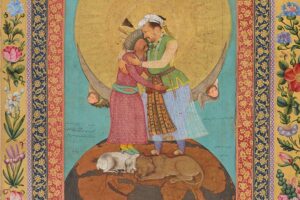
Jahangir was an avid patron of the arts, particularly painting. Mughal painting reached its zenith during his reign, with the establishment of an imperial atelier that produced exquisite miniature paintings. The artworks from his time are known for their refined aesthetics, intricate detailing, and a blend of Persian and Indian influences.
He also encouraged the compilation of historical and literary works. His own autobiography, the Tuzuk-i-Jahangiri (Memoirs of Jahangir), provides valuable insights into his reign, personal beliefs, and administrative policies. Unlike his predecessors, Jahangir had a keen interest in European art and culture, which he was exposed to through Jesuit missionaries at his court.