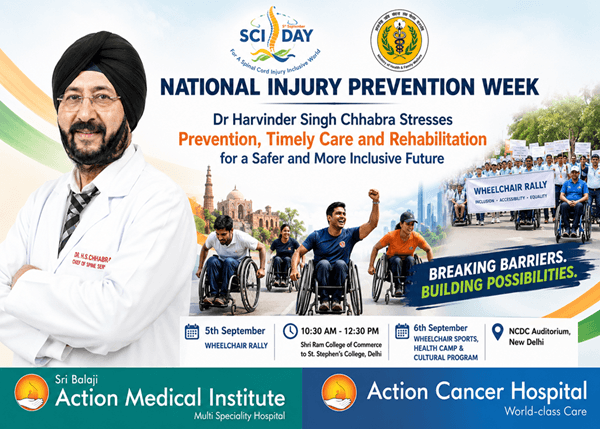
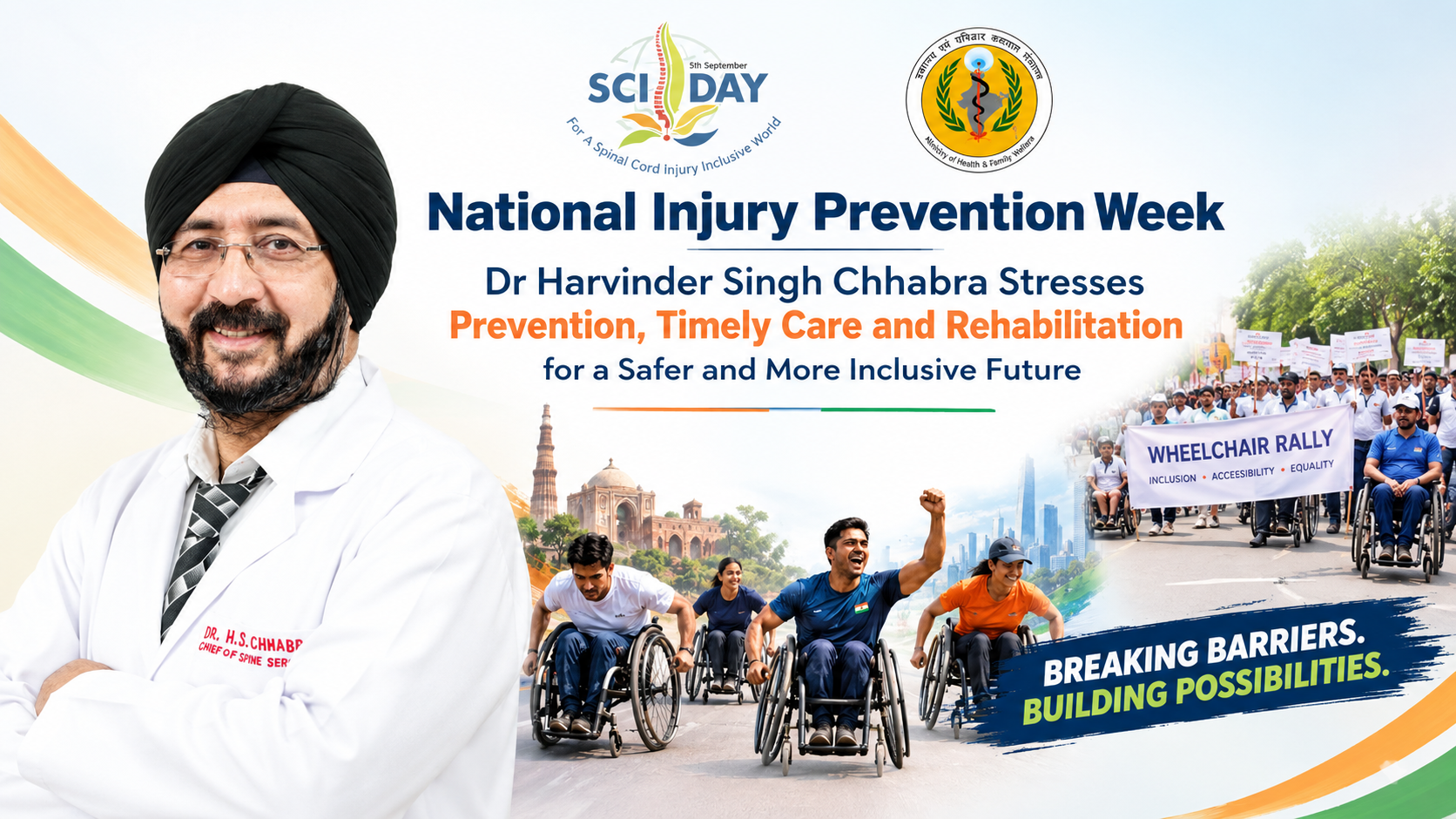
According to the organisers, the programme is intended to highlight the role of sports, culture and community participation in rehabilitation and improving the quality of life of people living with spinal cord injuries. The event will also be streamed live.
Focus on prevention and rehabilitation
Dr Harvinder Singh Chhabra, Chief of the Spine and Rehabilitation Centre at Sri Balaji Action Medical Institute, President of the Spinal Cord Society, Chairman of the Spine Wellness & Care Foundation and Coordinator for National Injury Prevention Week, said the campaign aims to reinforce the message that many injuries, including spinal cord injuries, can be prevented.
“Many injuries, including spinal cord injuries, can be prevented, and when they do occur, people can rebuild their lives through timely medical care, comprehensive rehabilitation and sustained social support,” he said.
Dr Chhabra said Spinal Cord Injury Day was conceptualised to create awareness about prevention while also highlighting that people who sustain spinal cord injuries can lead happy, meaningful and fulfilling lives with appropriate medical management and rehabilitation.
He also stressed the need for early intervention, wider access to rehabilitation and an environment that enables people with spinal cord injuries to live with dignity, independence and purpose.
Road safety message
Road safety is also an important part of the injury prevention campaign.
According to data reported by the Ministry of Road Transport and Highways (MoRTH), 16,397 people were killed in road accidents in 2021 due to not wearing seat belts. The figure included 8,438 drivers and 7,959 passengers.
The organisers said such figures highlight the importance of simple preventive measures, including consistent use of seat belts and greater awareness of road safety.
National Injury Prevention Week to conclude on September 7
The week-long campaign is scheduled to conclude on September 7 with a webinar focusing on injury prevention.
The initiative seeks to shift the conversation around spinal cord injuries beyond medical treatment alone, with greater emphasis on rehabilitation, accessibility, social participation and inclusion.
By bringing together healthcare professionals, people with disabilities, caregivers, students, volunteers and the wider community, the campaign aims to promote safer environments and support people living with spinal cord injuries in leading independent and meaningful lives.