Early Years and Upbringing
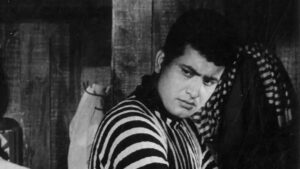
Following India’s 1947 partition, Manoj Kumar’s family moved to Delhi. His filmmaking would later be significantly impacted by the agonising experience of displacement and the challenge of beginning anew in a divided India. He was captivated by the world of film from an early age. He participated in college dramatics, which stoked his love for acting, after graduating from Hindu College, University of Delhi.
The character played by Dilip Kumar in the 1949 movie Shabnam served as the inspiration for his stage name, “Manoj Kumar.” Manoj aspired to reach the same heights in Indian cinema as Dilip Kumar, who he idolised like many others in his generation.
Getting into Bollywood
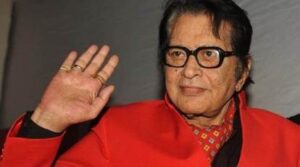
Although Manoj Kumar made his acting debut in the 1957 movie Fashion, his breakthrough performance came in the 1960 movie Kaanch Ki Gudia. His breakthrough roles were in the suspense thriller Woh Kaun Thi? (1964), which became a huge hit and made him a bankable star, and Hariyali Aur Rasta (1962).
He produced a number of popular romantic and dramatic films in the 1960s, such as Patthar Ke Sanam (1967), Shaheed (1965), Himalaya Ki God Mein (1965), and Do Badan (1966). His long-standing association with patriotic themes began with Shaheed, in which he played the revolutionary Bhagat Singh.
The Evolution of the “Bharat Kumar” Persona.
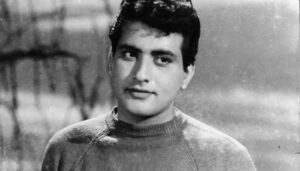
The 1967 movie Upkar marked a sea change in Manoj Kumar’s career. Manoj Kumar made the decision to create a movie about the life of an Indian farmer after being inspired by the catchphrase of then-prime minister Lal Bahadur Shastri, ” “Hail the Soldier, Hail the Farmer” (Jawan Jai Kisan). He wrote and directed Upkar in addition to acting in it. He received the National Film Award for Best Feature Film on National Integration for the hugely successful movie.
Manoj Kumar became a household name in patriotic film after Upkar. He gained the moniker Bharat Kumar from his on-screen persona of an Indian who is selfless, idealistic, and morally pure—often referred to as “Bharat.” During periods of social and political upheaval in India, his films inspired a sense of patriotism and touched the hearts of millions of people.
Filmmaking Efforts and Historic Productions
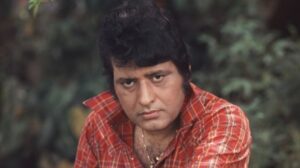
Manoj Kumar further solidified his position as a creative force in Bollywood by taking on the roles of writer and director in a number of films after Upkar’s success. Among his most renowned motion pictures are:
- Purab Aur Paschim (1970): This movie reaffirmed the notion that Indian culture was superior by contrasting Western materialism with Eastern spiritual values. It conveyed a powerful message of respect for Indian customs and cultural pride.
- The 1974 movie Roti Kapda Aur Makaan explored the disenchantment of the average person in a corrupt system as well as the necessities of human survival: food, clothing, and shelter. It is still regarded as one of the most socially conscious films in Indian cinema.
- One of the most ambitious films of its era was Kranti (1981), a historical epic about India’s fight for independence. The movie, which starred Dilip Kumar, Shashi Kapoor, and Hema Malini, was a box office hit and ended up being one of the highest-grossing films of the 1980s.
- In addition to being financially successful, Manoj Kumar’s films conveyed strong social and political themes. He became a champion of inspirational and educational film, frequently utilising melodrama, symbolism, and powerful monologues to engage the general public.

Impact and Style
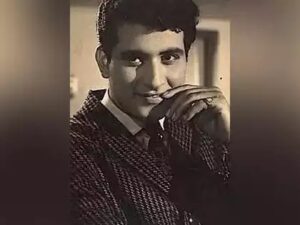
Over the years, Manoj Kumar’s signature hand-over-face pose came to symbolise him. He frequently combined poignant tales with powerful moral and patriotic overtones in his storytelling. There is no doubting the emotional resonance his films had with viewers, despite some critics accusing them of being unduly sentimental or didactic.



 Entertainment
 Entertainment