

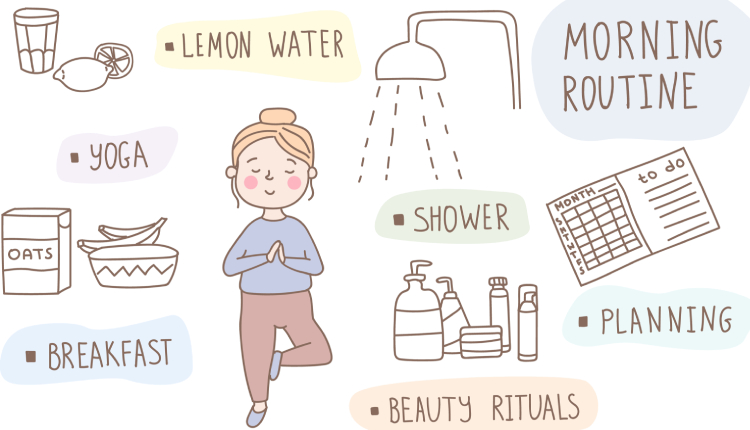
Starting your day with intention can transform your mental state, setting a calm and focused tone for the hours ahead. A well-crafted morning routine reduces stress, boosts clarity, and helps you approach challenges with resilience. Here’s a simple, effective routine to cultivate a stress-free mind, designed to fit into busy schedules while promoting mindfulness and well-being.
Why a Morning Routine Matters
Mornings are a fresh slate. A deliberate routine primes your brain for positivity, reduces decision fatigue, and anchors you in a sense of control. Studies show that consistent morning habits, like meditation or exercise, lower cortisol levels (the stress hormone) and enhance mood by triggering dopamine release. This routine blends science-backed practices with practical steps to help you start your day feeling grounded.
The Stress-Free Morning Routine
1. Wake Up Early (5 Minutes)
Set your alarm for 30–60 minutes earlier than usual, ideally between 5:30 AM and 7:00 AM, depending on your schedule. Early mornings are quiet, offering uninterrupted time for self-care. Avoid hitting snooze—place your alarm across the room to force you out of bed. Consistency is key; aim to wake up at the same time daily, even on weekends, to regulate your body’s circadian rhythm.

Tip: Use a gentle alarm sound, like birds chirping, to ease into waking.
2. Hydrate and Refresh (5 Minutes)
Drink a glass of room-temperature water right after waking to rehydrate your body and kickstart metabolism. Add a slice of lemon for a vitamin C boost, which supports immune health and mood. Splash cold water on your face or take a quick shower to invigorate your senses and shake off grogginess.

Why It Works: Dehydration increases stress hormones. Morning hydration improves focus and energy.
3. Mindful Breathing or Meditation (5–10 Minutes)
Sit in a comfortable position, close your eyes, and practice deep breathing: inhale for 4 seconds, hold for 4, exhale for 6. Do this for 5 minutes to calm your nervous system. Alternatively, try a guided meditation app for 10 minutes, focusing on gratitude or body awareness. Apps like Calm or Insight Timer offer free sessions.

Science Bit: Meditation reduces activity in the amygdala, the brain’s stress center, promoting emotional balance.
4. Gentle Movement (10–15 Minutes)
Engage in light exercise to get your blood flowing. Options include:
- Yoga: Try a 10-minute flow with poses like Cat-Cow, Downward Dog, and Child’s Pose to stretch and relax muscles.
- Walking: A brisk 10-minute walk outside exposes you to natural light, regulating serotonin levels.
- Stretching: Focus on neck, shoulders, and hips to release tension.
Avoid intense workouts if stress is high—they can elevate cortisol. Aim for movement that feels energizing but soothing.

5. Journal for Clarity (5–10 Minutes)
Spend a few minutes writing in a journal. Use these prompts to clear mental clutter:
- What am I grateful for today?
- What’s one thing I want to accomplish?
- What’s weighing on my mind, and how can I address it?
Alternatively, try “morning pages” (freewriting 1–2 pages without editing). This practice offloads worries and fosters creativity.