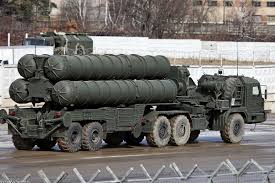

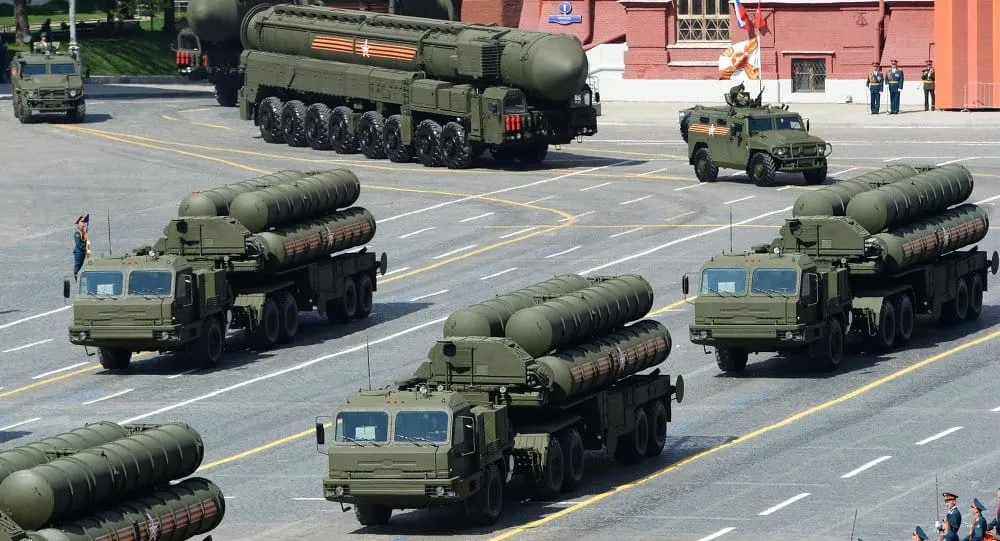
S-400 Air Defence System : In an era of advanced aerial threats—think stealth jets, drones, and hypersonic missiles—nations are racing to bolster their air defenses. Enter the S-400 Triumf, Russia’s cutting-edge air defense system that’s reshaping military strategies worldwide. Known for its unparalleled range and versatility, theS-400 Air Defence System has become a game-changer in modern warfare. But what makes this system so special, and why is it at the center of global debates? Let’s dive into its history, capabilities, and impact.
A Brief History of the S-400
Developed by Russia’s Almaz-Antey corporation, the S-400 Air Defence System (NATO designation: SA-21 Growler) entered service in 2007 as an upgrade to the S-300 series. Designed to counter a wide range of aerial threats, it quickly became a cornerstone of Russia’s defense strategy. Its global appeal grew as countries like China, India, and Turkey signed deals to acquire it, sparking both admiration and controversy.
Unpacking the S-400’s Capabilities
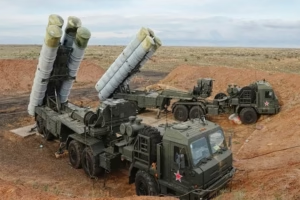
The S-400 Air Defence System is not just another missile system; it’s a multi-layered defense network. Here’s what sets it apart:
- Range and Reach: The system can engage targets up to 400 km away (with the 40N6 missile) and at altitudes from 10 meters to 30 km, covering everything from low-flying drones to high-altitude aircraft.
- Versatile Missiles: It supports multiple missile types, including the 48N6 (250 km range) and 9M96 (120 km range), allowing it to tackle diverse threats simultaneously.
- Advanced Radar: The S-400’s 91N6E radar can track up to 300 targets at once, even stealth aircraft, thanks to its anti-jamming technology.
- Rapid Deployment: The system can be operational in just 5 minutes, making it ideal for dynamic battlefields.
These features make the S-400 a formidable shield against modern threats, from ballistic missiles to cruise missiles.
Global Deployments : Who’s Using the S-400?
The S-400’s reach extends far beyond Russia. Key operators include:
- China: Deployed S-400 systems in 2018 to protect its eastern coast, enhancing its stance in the South China Sea.
- India: Began receiving S-400 units in 2021 under a $5.4 billion deal, bolstering defenses along its borders with China and Pakistan.
- Turkey: Acquired the system in 2019, a move that strained its NATO ties and led to U.S. sanctions under CAATSA (Countering America’s Adversaries Through Sanctions Act).
- Russia: Uses the S-400 extensively, including in Syria, to protect its military bases and assert regional influence.
Other nations, like Saudi Arabia and Qatar, have expressed interest, underscoring the system’s global demand.